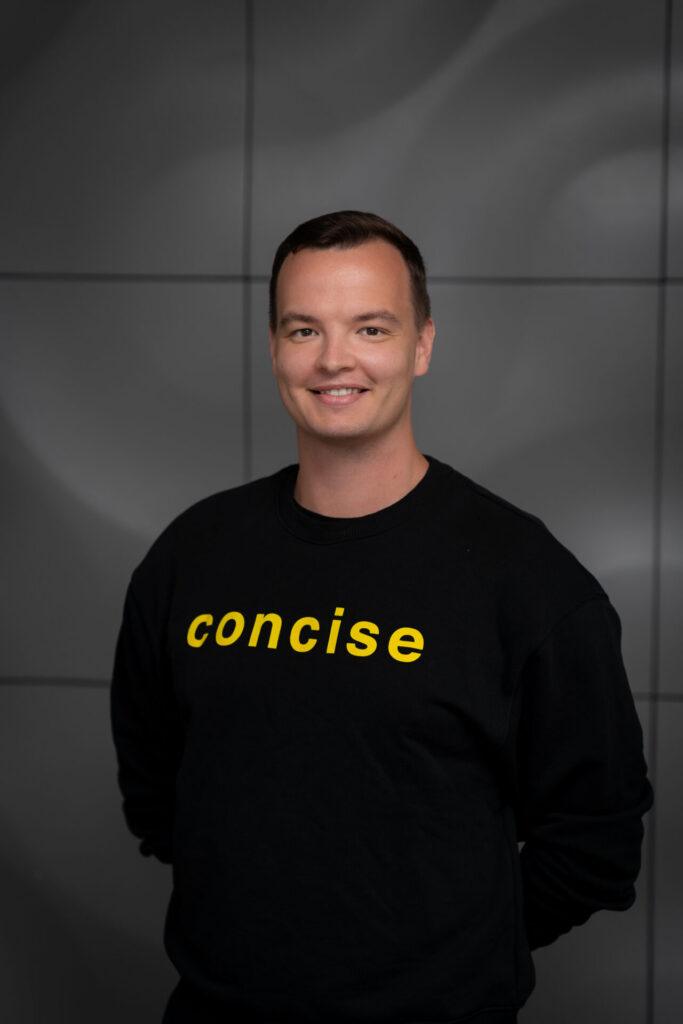
There’s a very specific kind of silence that happens when someone asks you a question and you instantly realize your life is about to change.
For me, it happened in a startup accelerator, back when I was a technical co-founder at Fanvestory. I was happily living in builder mode: writing code and building the product. Then an investor looked at me and asked:
“Kristjan, can you actually grow an engineering team and lead people? Because if you keep building everything yourself, you’ll become the bottleneck. If you’re ready for that journey, I’ll invest.”
And that was it. I was basically forced out of my comfort zone.
I didn’t step into leadership because I felt “ready”. I stepped into it because the company needed it, and because I realized something uncomfortable: if I didn’t change, the business would hit a ceiling. So I walked straight out of my comfort zone and into the world of people, communication, conflict, expectations, and the messy stuff that doesn’t compile neatly.
What’s funny is that even today, working inside a much larger organization, I still lead my team like an independent startup. Same mindset: autonomy, clear ownership, fast learning, and a strong bias toward experimenting.
Because startup life teaches you something very quickly: most ideas fail. And that’s normal. The real winners are the ones who run the most experiments and learn the fastest. And honestly, I still believe that.
💬 People often say leadership starts with self-leadership. What does that mean to you as a leader, and how does it show up in your daily work?
Leadership starts with… your inner weather
People love saying “leadership starts with self-leadership,” and yes, it’s true… but let’s make it practical.
For me, self-leadership is mostly about awareness: what condition am I in today? Am I focused? Am I tired? Am I distracted? Am I about to bring stress into the room and accidentally spread it like a virus?
Because if I’m unclear, the team gets unclear. If I’m reactive, the team gets tense. If I’m calm and grounded, suddenly everything is easier.
And honestly, a huge part of that “inner weather” shows up in one place: decision-making.
Leaders make decisions all day. The decisions are rarely perfect. But not deciding has a cost too. When you wait for perfect information, people lose momentum. Priorities blur. The team fills the silence with assumptions.
So I’ve learned to respect this principle:
Make the best decision you can with the data you have right now.
That doesn’t mean being reckless. It means being realistic. Most of the time, we don’t need 100% certainty – we need direction. And usually, direction beats perfection.
A framework I really like (and one I’ve seen repeated in great leadership thinking) is Type 1 vs Type 2 decisions:
- Type 1 decisions are one-way doors:
hard to reverse, high impact. Hiring or firing, big strategic bets, major architecture shifts, stepping into or out of a market – things where “oops” is expensive. - Type 2 decisions are two-way doors:
reversible, low risk, easy to adjust. Most product decisions, many process tweaks, small experiments, etc.
With Type 1 decisions, I slow down. I pull in perspectives. I try to stress-test the plan. For Type 2 decisions, speed matters more than perfection. I’d rather decide, run the experiment, look at the results, and iterate – because that’s how learning happens.
This matters because teams often mix them up. You end up treating a small, reversible decision like a big one, so you drown it in meetings and overthinking. Then you do the opposite with a big, irreversible decision and try to move fast by improvising. That’s where real damage happens.
While building my own startup, I learned that if you let emotions drive your decisions, you will regret it. Startup life is like an American roller coaster. The best day of your life can be followed by the worst day of your life – sometimes within 24 hours.
So I’ve built a rule for myself:
I don’t make Type 1 decisions when things are really good or really bad.
I don’t make big, irreversible decisions when I’m euphoric or panicking. In both states, your brain lies to you.
When a decision really matters, you need a short pause to get back to neutral. Sometimes that’s one night of sleep. Sometimes it’s a walk. Sometimes it’s a hard conversation with someone you trust. Not to delay, but to separate urgency from importance.
That’s self-leadership for me. You don’t control everything around you. But you do control your state. And your state shapes your decisions. Your decisions shape your team.
💬 How do you set clear goals for your team and ensure that people understand them? How have you turned a vague expectation into a clear goal for your team?
I don’t “set goals” for my team. We build them together.
In my experience, goals only work when people help create them. They challenge them. They shape them. They argue about them. And then they own them. That’s how you get real commitment, not polite agreement.
For a goal to work, it has to be simple and measurable. Everyone on the team should understand it without a long explanation. And we should be able to clearly say whether we hit it or not. If you can’t measure it, you can’t really own it.
Funny enough, most of our debates aren’t about what the goal is. They’re about how ambitious it should be. That’s usually a good sign. It means people care. It means they’re already emotionally invested.
The other part is trust. Without trust, people don’t challenge goals. Without challenge, weak ideas survive. And then you get meetings where everyone nods and execution where nobody commits.
I try to create a space where people can safely say, “I don’t agree,” or “I don’t understand,” or “This won’t work.” That friction early saves a lot of pain later.
💬 What does creating a supportive work environment mean to you, and what conscious steps have you taken as a leader to build it?
A supportive environment doesn’t mean comfort. It means safety.
When people hear “supportive environment,” they sometimes imagine a workplace where everything is always positive and nobody ever gets challenged.
For me, supportive means something much more practical. It means people feel safe to ask “dumb” questions, safe to disagree, safe to try things that might fail, and safe to openly talk about mistakes.
Because fear kills initiative. And initiative is oxygen in a high-performing team.
The point isn’t to celebrate failure. The point is to treat failure as information. When you do that, the team gets stronger. When you treat failure as shame, people stop trying. And then you’re not leading a team anymore – you’re leading people who are busy protecting themselves.
As a leader, that means you go first. You admit your own mistakes. You talk openly about what didn’t work and what you learned. You reward learning, not just outcomes. You react calmly when something breaks. Because every reaction teaches the team what is actually safe here.
And once people feel safe, something interesting happens. They take ownership. They speak up earlier. They experiment more. And that’s where real performance comes from.
💬 How do you ensure open, honest, and regular communication within your team?
Open communication starts when the leader is willing to say: “I don’t know.”
One of the most useful things I’ve learned is simple: if you want honesty in your team, you have to model it first.
I share context early, even when things feel uncertain. Silence creates stories, and teams will always fill gaps with guesses.
I also make communication predictable. Regular one-on-ones and team check-ins give people a safe place to raise issues before they turn into problems.
And I pay a lot of attention to how I react. If you punish bad news, people hide it. If you welcome it, people bring it early. And early is when you can still do something about it.
💬 People say honest feedback can hurt but helps you grow. When was the last time you gave uncomfortable feedback, and what changed afterward?
Feedback doesn’t have to hurt. But it does have to be real.
People often say honest feedback hurts but helps. Sometimes that’s true. But in my experience, feedback hurts most when it comes too late, too vaguely, or with too much emotion. Then it feels like an attack instead of help.
Exit interviews have never been easy for me. You can’t really prepare for those conversations, and you definitely can’t predict how they will end.
But at some point I made a clear decision: I will be straightforward. I will be direct. And I will stay kind.
Surprisingly, many of those conversations have ended in places I never expected. The tension drops. The dust settles. Things become clear. Quite often people realize out loud that they’ve been in the wrong place for a long time.
And instead of anger, the dominant feeling in the room is relief. Sometimes even calm. Sometimes even gratitude.
A lot of that comes from how the conversation is handled. I’ve learned a lot from Chris Voss’ work: slow the conversation down, name what you see, reflect what you hear, and make the other person feel understood before trying to move anything forward.
Very often, when people feel truly heard, the fight leaves the room. And then you can actually talk.
When I need to give uncomfortable feedback, I follow one rule: I stay kind and I stay direct. If you go direct without care, you turn it into brutality. If you go caring without directness, you become unclear. And unclear feedback helps no one.
I also remind myself that feedback often points to blind spots. You can’t see your own blind spots by definition. That’s why feedback matters, even when it stings.
The part people forget is that receiving feedback is also a leadership skill. Your reaction trains your team. If you get defensive, people stop telling you the truth. If you show that you can handle it, they keep bringing you the real stuff.
When someone gives me feedback, I try to step into their shoes. I ask what they saw, what impact it had, and what they need going forward. You don’t have to agree with everything. But you do have to understand it.
💬 Describe a difficult conversation you postponed as a leader and what it taught you.
The hard conversations you delay don’t disappear. They get more expensive.
If I could coach my younger self, I’d say this: stop postponing the awkward conversations.
I’ve delayed talks where the problem wasn’t technical skill but attitude and behavior. I told myself it would fix itself. It never did.
A delayed conversation doesn’t disappear. It gathers frustration, misunderstandings, and emotion. And the longer you wait, the harder it becomes. What could have been a calm ten-minute talk often turns into a long, emotionally loaded situation.
One thing I’ve learned is that many “performance problems” are actually fit problems. People often struggle because they’re in the wrong role or working on things they don’t really want to do. That creates stress. And stress spreads fast.
Part of leadership is noticing that early and acting on it. Not to punish, but to understand what’s really going on. Sometimes the right move is support. Sometimes it’s a change in responsibilities. Sometimes it’s a hard but honest conversation about whether this is the right place at all.
Every time I’ve finally had the conversation I was avoiding, two things happened. First, the situation improved. Second, I wished I had done it much earlier.
💬 Describe a situation where results did not meet expectations. How did you take responsibility as a leader, and what lesson did you take from it?
When results fall short, your first job is to turn it into learning.
I honestly don’t have one big dramatic failure that jumps to mind. What I do have is dozens of small ones almost every day. Wrong assumptions. Experiments that don’t work. Ideas that sound good and fall flat.
That’s normal. That’s what building things looks like.
When results don’t match expectations, I don’t treat it as something exceptional. I treat it as part of the job.
As a leader, I take responsibility first. Not in a dramatic way, but in a practical one. I look at what we believed, what we tested, and what we missed. I don’t start with who.
I start with what and why.
- If goals were unclear, that’s on me.
- If priorities conflicted, that’s on me.
- If we moved too slowly or without enough learning, that’s also on me.
Then we turn it into learning.
We ask simple questions:
- What did we expect to happen?
- What actually happened?
- What surprised us?
- What will we do differently next time?
I see failure as information. When something doesn’t work, it gives you feedback. Feedback builds knowledge. And knowledge makes the next decision stronger.
So when outcomes fall short, the goal isn’t to protect egos or find someone to blame. The goal is to get smarter, adjust quickly, and move on. That loop, repeated every day, is how teams grow.
💬 How do you balance empathy and high expectations as a leader to support people’s development while still achieving strong results?
Empathy and high standards aren’t opposites. You need both.
I really believe this. Empathy without standards doesn’t lead to growth. You can be kind and still let people stay stuck.
Standards without empathy don’t last. People either burn out or shut down.
For me, empathy starts with understanding the person. What motivates you. What drains you. What you’re trying to get better at. What’s happening outside of work.
You don’t lead roles. You lead humans.
But empathy doesn’t mean lowering the bar.
I’m very open about expectations. About what good looks like. About what the team needs to succeed. Clear standards are not pressure. They’re direction.
The balance shows up in everyday moments. When someone struggles, I don’t jump straight to judgment. I get curious.
- Is this a skill issue?
- A context issue?
- A motivation issue?
- Or a role issue?
Then we work on the real problem, not the visible symptom.
I try to encourage people to step out of their comfort zones, take calculated risks, and push their own boundaries. Not reckless risks, but thoughtful ones – the kind where you learn something even if it doesn’t work.
I also challenge the team to think bigger. Often much bigger than their first instinct. Not ten percent better, but ten times better. Those conversations stretch how people see problems and what they believe is possible.
And even when we don’t reach the “ten times” version, we almost always land in a much better place than where we started.
💬 What is one leadership practice that consistently delivers real results in your team?
Clear ownership with real autonomy.
If I had to name one leadership practice that consistently creates real results in my teams, it’s this: clear ownership paired with real autonomy.
Everyone should know exactly what they own. What outcome they’re responsible for. Where they can decide on their own. And where they need alignment.
Ambiguity kills speed. Clear ownership creates momentum.
But ownership without autonomy is fake. If someone carries responsibility but can’t make decisions, they don’t own anything. They just wait.
So I try to make both explicit.
- This problem belongs to you.
- This outcome is yours.
- You decide how to get there.
I’m here to support, challenge, and remove obstacles.
When you get this right, interesting things happen. Decisions move closer to the problem. People stop waiting for permission. They notice issues earlier. They fix things before they become big.
One of my leaders, Frank, once said something that stuck with me: it’s often much easier to ask for forgiveness than for permission.
I don’t mean being reckless. I mean creating a culture where people act, try, and take responsibility instead of freezing and waiting.
It also changes motivation. People don’t work on “tasks.” They work on something that’s theirs. And when something is yours, you care differently.
I’ve seen this work in startups and in large organizations.
- Different context. Same human effect.
- Clarity creates ownership.
- Ownership creates energy.
- And energy creates results.